



Cricket Shoes


VECTOR X CKT-200 Rubber Cricket Shoes For Men


Vector X Drive 2.0 Cricket Shoes


VECTOR X Striker Cricket Shoe For Men Lightweight Synthetic Leather Upper PVC Stud Shoe


Vector X Blast-7.0 Stud Cricket Shoes Men


VECTOR X CKT-200 Spikes Cricket Shoes For Men


VECTOR X Blaster Cricket Shoes For Men


Vector X Pull up Cricket Shoes Men


Vector X Swing 2.0 Cricket Shoes With Metal Spikes for Men & Boys Sports Shoes


Vector X Bouncer 2.0 Cricket Shoes for Men


Vector X Swing 2.0 Cricket Shoes for Men & Boys Sports Shoes


Vector X Target Plus Cricket Shoes For Men


VECTOR X Target Pro Cricket Shoes For Men
- Featured
- Most relevant
- Best selling
- Alphabetically, A-Z
- Alphabetically, Z-A
- Price, low to high
- Price, high to low
- Date, old to new
- Date, new to old
Cricket Shoes for Every Pitch, Every Position, Every Player
No sport in India is played on a wider variety of surfaces than cricket. A school match might happen on a matting wicket laid over a concrete base. A club game plays out on red clay in summer and soft grass after the monsoon. An academy match runs on manicured turf. A weekend match at a municipal ground uses hard, dry earth that bakes under the sun from April to June. Each of these surfaces places completely different demands on the shoes a cricketer wears — the wrong pair on the wrong surface reduces grip, increases injury risk, and wears out the shoe in half the time.
Cricket is also a sport where your role on the field determines what your feet go through. A fast bowler's front foot lands with a force equivalent to five to eight times their body weight on every single delivery — a force transmitted through the ankle and knee that compounds over a long bowling spell. A batsman needs quick footwork, balance across the crease, and the agility to turn sharply for a run. A wicketkeeper needs lateral mobility and flexibility across extended sessions in the field. No single shoe design serves all three equally well.
Vector-X cricket shoes are built to match the real conditions Indian players play in — rubber PVC studs for hard ground, matting, and turf, synthetic leather uppers for durability, EVA cushioning for impact absorption across long matches, and construction that holds up across the entire season rather than just the first few weeks of use. The range covers school players, club cricketers, and regular competitive players at a price that does not require a premium international brand budget.
The Most Important Decision: Surface First, Shoe Second
Before looking at any specific model, understand the surface you play on. This single decision determines whether rubber studs or metal spikes are right for you — and getting it wrong affects every session you play.
Rubber Stud Cricket Shoes — for Hard Ground, Matting, and Turf
Rubber studs are moulded directly into the outsole — short, dense protrusions that grip the surface without penetrating it. They work on firm surfaces: matting wickets, concrete-based artificial grounds, hard dry red clay, and the kind of Indian club and school grounds that are too firm for metal spikes to penetrate usefully.
The vast majority of Indian recreational and club cricketers play primarily on one of these surfaces. Matting wickets on concrete — the most common format across schools and municipal grounds — require rubber studs, not metal spikes. Metal spikes on concrete damage the spike tips, offer no useful penetration into the surface, and feel uncomfortable underfoot across a long innings or fielding session.
Rubber stud cricket shoes are also significantly more versatile. They can be used across matting, hard ground, firm turf, and practice nets without changing shoes. For players who train in nets and play matches on different surface types during the same week, a quality rubber stud cricket shoe is the practical choice.
Right for: Matting wickets, hard ground, dry turf, concrete-based surfaces, practice nets, school and club cricket, all-rounders who play on variable surfaces.
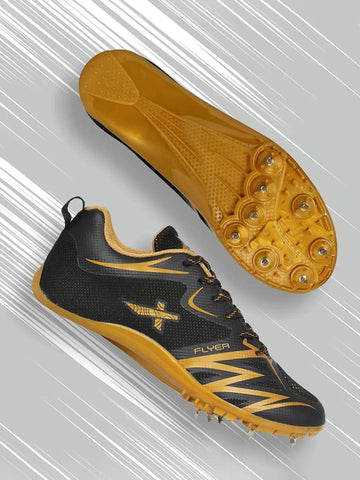
Metal Spike Cricket Shoes — for Natural Grass and Soft Turf
Metal spikes penetrate the surface. On natural grass — especially after rain or dew — they dig in and anchor the foot, providing the grip that a fast bowler needs during the delivery stride, a batsman needs when pushing off hard for a run, and a fielder needs when stopping suddenly at full speed.
On soft natural turf, a player without spikes will feel the foot slipping during any explosive movement. This is where metal spikes earn their place. For players who compete primarily on natural grass pitches — district tournaments, state-level games, club matches on maintained grounds — metal spikes are the correct choice.
Metal spikes are almost never appropriate for matting, concrete, or indoor surfaces. They damage artificial surfaces and provide no traction benefit on surfaces they cannot penetrate.
Right for: Natural grass pitches, soft turf, dewy morning conditions, competitive matches on maintained grounds, fast bowlers who need maximum grip during the delivery stride.
The Indian Reality: Why Most Players Need Rubber Studs
Honest advice for the majority of Indian players: if you play primarily on school grounds, municipal pitches, academy nets, or club grounds in Indian cities and towns, you are almost certainly playing on hard ground or matting. Metal spikes are not suited to these surfaces and rubber studs will serve you better in almost every situation you encounter.
Metal spikes are the right choice if you specifically play competitive cricket on natural grass — district tournaments, state-level matches, or club games on maintained turf grounds. If that describes your game, spikes are the right investment. If it does not, rubber studs are.
The Vector-X Cricket Shoe Range
Blaster — PVC Studs, Durable Construction The Blaster is Vector-X's entry-level cricket shoe, built for players across all levels who need a reliable, durable cricket shoe for hard ground and matting surfaces. PVC rubber studs provide adequate grip on the surfaces most Indian players use. Lightweight construction keeps foot fatigue manageable across long matches and fielding sessions. Available across a wide size range for men and boys, making it one of the most accessible cricket shoes in the range.
Best for: Beginners, school players, recreational cricketers, matting and hard ground, players equipping themselves for the first time. Price: From ₹825.
Blaster-22Y — Synthetic Leather + Mesh Upper, PVC Sole Studs The Blaster-22Y builds on the Blaster's construction with a synthetic leather and mesh upper for improved durability and breathability. The PVC sole studs provide traction on turf, hard ground, and matting surfaces. Lace-up closure for a secure fit during batting, bowling, and fielding. Lightweight design suitable for all-round use across a match day.
Best for: School and junior club players, all-rounders, players who need a versatile cricket shoe across multiple surfaces. Price: From ₹855.
Drive 2.0 — Improved Cushioning and Stability The Drive 2.0 is built with improved cushioning and stability over the entry-level range — a step up for players who spend extended time at the crease or in the field and need a shoe that absorbs the cumulative impact of long sessions. Better cushioning means less foot fatigue in the later stages of a long innings, a full day's fielding, or a multi-session practice day.
Best for: Regular club players, players with longer match exposure, batsmen and all-rounders who need comfort across extended play. Price: From ₹1,199.
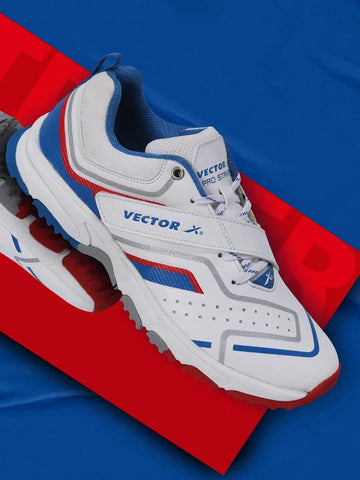
Striker — Synthetic Leather Upper, Cushioned EVA Insocks The Striker is Vector-X's mid-range performance cricket shoe — designed for superior performance on the field, combining a durable synthetic leather upper with cushioned EVA insocks for improved comfort and support during intense gameplay. The synthetic leather provides long-lasting wear and a soft touch underfoot, while the rubber outsole ensures firm grip and flexibility on turf, hard ground, and matting surfaces. Lightweight construction, good for quick running between the wickets and fast-paced fielding.
Best for: Intermediate and regular competitive players, batsmen who need quick footwork and flexibility, fielders who cover ground. Price: ₹1,445.
Striker Pro — Performance Cricket Shoe The Striker Pro is the upper-range option for players who need the full combination of performance construction, durability, and reliable grip across multiple surface types. Built for serious club cricketers who play regularly and need their cricket shoes to perform consistently across an entire season.
Best for: Serious club players, regular competitive cricketers, players who want maximum durability and performance across a full season.
How to Choose the Right Cricket Shoes — by Playing Role
Cricket is unusual among team sports in that different players in the same team face completely different physical demands on their feet. Choosing shoes to match your position is not a luxury — it is how serious players and coaches think about footwear.
Fast Bowlers Research published in the Journal of Sports Sciences (PubMed, 2014) measured ankle joint biomechanics in 51 elite male fast bowlers across national Under-19, first-class, and international levels. The finding: during the delivery stride, the front foot lands with ground reaction forces that subject the ankle joint to extreme loading across wide ranges of movement — with forces measured at up to eight times body weight in some delivery styles.
Fast bowlers need the most from their cricket shoes. Spike grip — or maximum rubber stud grip — during the run-up and landing is essential. Ankle support from a reinforced collar and heel counter prevents inversion during the front foot plant. Cushioning in the forefoot and heel absorbs the repetitive landing forces across a long bowling spell. And durable construction matters most here — a fast bowler puts more stress on their shoes per session than any other player on the field.
Recommendation: Choose cricket shoes with maximum outsole grip for your surface, reinforced ankle collar, padded heel counter, and EVA cushioning. If playing on natural grass, metal spikes. If on hard ground or matting, rubber studs with maximum stud depth.
Batsmen A batsman's foot requirements are different. Quick movement across the crease, sharp turns for runs, the balance needed to hold a solid stance — these are the demands. Lightweight construction reduces the energy cost of fast footwork. A snug fit prevents the foot from sliding inside the shoe during sharp turns. Grip on the popping crease area is important for maintaining balance during a shot.
Recommendation: Prioritise lightweight construction and snug fit over heavy ankle support. Rubber studs for most Indian pitches. The Striker's lightweight build and flexible construction suit batsmen who need quick footwork.
Spin Bowlers Spin bowlers generate less explosive front foot force than fast bowlers — the landing is controlled rather than the hard plant of a pace delivery. Flexibility and comfort across long bowling spells matter more than aggressive spike grip. Rubber studs on most surfaces provide adequate traction for the spin bowler's delivery action.
Recommendation: Comfort and cushioning over aggressive grip. Rubber studs on matting and hard ground. The Drive 2.0's improved cushioning suits spin bowlers who bowl long spells.
Wicketkeepers Wicketkeepers stand behind the stumps for the entire batting innings — often five to seven hours in a full-day match. Lateral movement for diving and collecting wide balls, the flexibility to squat low for hours, and lightweight construction that does not tire the legs over an extended keeping session are all priorities.
Recommendation: Lightweight rubber stud shoes with good lateral flexibility and cushioning for the long squat position. Avoid heavy or rigid construction.
Fielders and All-Rounders Fielders cover the most ground and need cricket shoes that handle explosive sprinting, sudden direction changes, and diving without compromising comfort over an extended fielding session. All-rounders face the demands of both batting and bowling in the same match — a versatile rubber stud shoe suited to the primary playing surface is the practical choice.
Understanding the Construction — What the Specs Actually Mean
PVC Sole Studs PVC (Polyvinyl Chloride) moulded studs are the standard outsole construction in rubber stud cricket shoes at the affordable end of the market. They provide adequate grip on hard ground, matting, and firm turf, and are durable against the abrasion of these surfaces. PVC studs do not wear as quickly on hard surfaces as softer rubber compounds.
Rubber Outsole with Moulded Studs A full rubber outsole with moulded studs provides better flexibility and slightly more grip than a PVC stud configuration, particularly on slightly varied surfaces. The outsole material contributes to overall shoe flexibility and the feel of the shoe during footwork.
Synthetic Leather Upper Synthetic leather — used in the Blaster-22Y and Striker — is more durable than mesh alone and holds its shape better under the repeated use of practice and match play. It is also easier to clean after muddy or dusty conditions. Mesh panels within the upper improve ventilation — important for Indian players who play through the summer months in high temperatures.
EVA Insocks and Midsole EVA (Ethylene Vinyl Acetate) foam is the most widely used cushioning material in cricket shoes. As a midsole or insock layer, it absorbs the impact forces generated by the delivery stride, the push-off during batting footwork, and the repeated loading of fielding. The Drive 2.0's improved cushioning comes from a more substantial EVA construction — the practical difference is reduced foot fatigue during long sessions.
TPU Shank Some cricket shoes include a TPU (Thermoplastic Polyurethane) shank — a rigid plate embedded in the midsole at the midfoot. It controls torsional flex, preventing the midfoot from collapsing or twisting during the explosive lateral movements of fielding or the push-off of a batsman's footwork. It adds structural integrity without significantly adding weight.
Why Vector-X Cricket Shoes Are Worth Choosing
Built for Indian Pitch Realities Indian cricket is played on a spectrum of surfaces that no single international brand optimises for. Vector-X cricket shoes are designed for the surfaces Indian players actually use — hard red clay in April, matting on concrete in school competitions, firm turf in club cricket. The rubber PVC stud construction across the range is suited to these surfaces.
Durable Synthetic Upper Construction The synthetic leather upper on the Blaster-22Y and Striker provides durability across a full season's use — resisting the wear from repeated boot contact during fielding, the abrasion of hard ground surfaces, and the cleaning and drying cycles that follow muddy practice sessions.
EVA Cushioning for Long Match Days A cricketer runs 2–5 kilometres in a single match, stands in the field for hours, and may bat for extended periods. EVA cushioning in Vector-X cricket shoes absorbs the cumulative impact of these activities, reducing foot fatigue in the later stages of a long day.
Priced for Indian Cricket Players Vector-X cricket shoes range from ₹825 (Blaster) to ₹1,445 (Striker) — covering every level of player from school cricket to serious club competition without requiring a premium brand budget.
Free Shipping Above ₹499 Pan-India delivery with free shipping on orders above ₹499.
Shipping, Returns & Warranty
Pan-India Delivery — Vector-X delivers cricket shoes across India with tracking and reliable timelines. Free shipping on orders above ₹499.
7-Day Returns & Exchange — Returns and exchanges accepted within 7 days of delivery on eligible products in unused, original condition.
Replacement for Defective Products — Defective, damaged, or incorrect products replaced within 2–3 business days.
Cricket Shoes — Frequently Asked Questions
What is the difference between rubber studs and metal spikes in cricket shoes? Rubber studs are moulded protrusions built into the outsole — they grip the surface without penetrating it. They work on hard ground, matting wickets, firm turf, and concrete-based surfaces, which describes the majority of cricket grounds used for school and club cricket in India. Metal spikes penetrate natural grass surfaces, providing the deep grip that is essential for fast bowlers on soft turf and beneficial for batsmen and fielders on natural grass after rain or dew. Metal spikes are not suitable for matting or concrete-based grounds — they damage artificial surfaces and provide no traction benefit on surfaces they cannot penetrate.
Which cricket shoes are best for matting wickets? Rubber stud cricket shoes are the correct choice for matting wickets. Matting is almost always laid over a concrete or hard base. Metal spikes cannot penetrate concrete, offer no grip advantage on matting, damage the spike tips on hard surfaces, and feel uncomfortable underfoot during extended play. Rubber studs grip the matting surface effectively and hold up well against the hard base. All Vector-X cricket shoes use rubber PVC studs and are suited to matting wicket play.
Can I use rubber stud cricket shoes on natural grass? Yes, on firm dry grass, rubber studs provide adequate grip for recreational and club play. They are less effective than metal spikes on soft, damp, or freshly cut natural grass — particularly for fast bowlers who rely on the front foot anchor during the delivery stride. If you play on natural grass regularly and bowl pace, metal spikes on a separate pair of grass-specific shoes are worth the investment. For most Indian players who play on mixed surfaces, rubber studs are the versatile everyday choice.
Why do fast bowlers need different cricket shoes from batsmen? Fast bowling subjects the front foot to ground reaction forces of up to eight times the bowler's body weight on every delivery — a loading rate that far exceeds any other movement in the sport. This is well-documented in biomechanics research published in the Journal of Sports Sciences. Fast bowlers need maximum outsole grip to anchor the front foot during the delivery stride, reinforced ankle support to manage the extreme lateral and longitudinal forces on that ankle, and substantial EVA cushioning to absorb the landing force across a long bowling spell. Batsmen and fielders need lighter, more flexible shoes optimised for quick footwork and agility rather than delivery-stride anchoring.
What does EVA insole mean in cricket shoes? EVA stands for Ethylene Vinyl Acetate — a lightweight foam used in the insole and midsole of cricket shoes. It absorbs impact energy during the delivery stride, batting footwork, and fielding sprints, converting it into heat rather than transmitting it to the foot, ankle, and knee. Better EVA construction — thicker, more resilient foam — means more cushioning across a long match day and less cumulative fatigue. The Drive 2.0 uses improved EVA cushioning specifically for players who need more comfort across extended match exposure.
What is a TPU shank in cricket shoes? A TPU shank is a rigid plastic plate embedded in the midsole at the midfoot. It controls torsional flex — the twisting of the shoe during explosive lateral movements and push-offs. Without a shank, the shoe can fold or collapse at the midfoot under load, which reduces stability and the efficiency of power transfer during the bowling run-up, batting footwork, and fielding sprints. Shoes with a TPU shank feel more structured and supportive underfoot during dynamic cricket movements.
How should cricket shoes fit? Cricket shoes should fit snug with approximately a thumb's width between the longest toe and the end of the shoe. Try on with the socks you play in — cricket socks are thicker than casual socks and take up volume inside the shoe. A loose fit allows the foot to slide during the delivery stride or a sharp batting turn, reducing control and increasing blister risk. A shoe that is too tight restricts blood flow and becomes progressively more uncomfortable during long fielding or batting sessions. If between sizes, go half a size up.
How do I care for cricket shoes to make them last? After every session on hard ground or matting, knock the loose dirt off the studs and wipe the upper with a damp cloth. For grass sessions, remove grass and mud before it dries on the studs — dried mud hardens and is more abrasive when the shoe next flexes. Air-dry at room temperature — never use a direct heat source like a radiator or dryer, which softens EVA foam and weakens the adhesive bonding the sole to the upper. Store in a ventilated bag, not sealed. Check the stud condition regularly — worn PVC studs provide progressively less grip and are worth replacing before the season rather than at the end of it.
The pitch does not forgive the wrong shoe. Neither does the delivery stride.
Choose the Vector-X cricket shoe built for your surface, your position, and your season. Explore the full range and order with free shipping above ₹499.
Related Collections: Football Shoes | Basketball Shoes | Badminton Shoes | Sports Bags | Football Balls | Shinguards | Gym Gloves | Bibs

