



Running Shoes


VECTOR X Flyer Running Spike Shoes for Men | Lightweight Track & Field Running Shoes with TPU Sole, Secure Fit & Superior Grip


VECTOR X Shark Running Shoes for Men | Lightweight EVA Cushioning, Breathable Mesh Upper, Durable Rubber Outsole Sports & Jogging Shoes


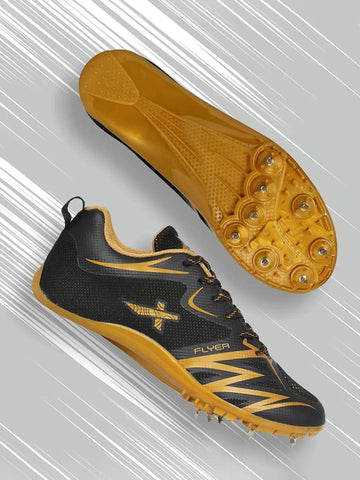
Vector X Flyer Track Spike Running Shoes for Men | Lightweight Knitted Upper, TPU Plate with 8 Removable Spikes, Racing & Sprint Training Shoes


Vector X FLYER Running Spike Shoes for Men | Lightweight Track & Field Racing Shoes with 8 Removable Spikes, Breathable Upper & Cushioned Support
- Featured
- Most relevant
- Best selling
- Alphabetically, A-Z
- Alphabetically, Z-A
- Price, low to high
- Price, high to low
- Date, old to new
- Date, new to old
Running Shoes Built for Indian Roads, Indian Runners, Indian Conditions
Running in India is not the same as running anywhere else. Oregon test labs and European road surfaces do not simulate what Indian runners face every morning — 50°C surface temperatures on Delhi tarmac in May, monsoon puddles covering broken drains in July, fine red dust coating every surface in summer, and the uneven, potholed roads that characterise most Indian cities outside of premium residential zones. A running shoe that performs beautifully in a controlled environment can fall apart — in comfort, breathability, and durability — within a month of daily use on Indian roads.
Vector-X running shoes are built for what Indian runners actually run on. The range covers everyday joggers looking for a comfortable, affordable daily trainer, fitness enthusiasts who run four to five mornings a week, gym-goers who want a versatile shoe that works for both cardio and floor sessions, and track athletes who need spike performance for competitive racing. Every model in the range uses knitted or mesh uppers for the ventilation that Indian summer temperatures demand, EVA or memory foam midsoles for cushioning across varied terrain, and rubber outsoles for grip and abrasion resistance on the hard, uneven surfaces that most Indian runners encounter daily.
Getting the right running shoe does not mean buying the most expensive one — it means matching the shoe to how you run, where you run, and how often.
What Running Shoes Actually Do — and Why It Matters
Approximately 80% of distance runners land on their heel first — a movement that generates a sharp impact force through the heel, ankle, and up the kinetic chain to the knee and hip. Without cushioning between the heel and the road, that force is transmitted directly through the joints on every stride. Over a 5 km morning run at a comfortable pace, a 70 kg runner takes roughly 4,500 to 5,500 steps — each one loading the joints with forces between one and three times their body weight.
The midsole of a running shoe is what stands between that force and your joints. It absorbs energy on landing and returns some of it as the foot pushes off for the next stride. The quality, thickness, and density of the midsole foam directly determines how much cushioning you feel across the first kilometre versus the last — and whether your knees and ankles feel the accumulated impact of weeks of regular training.
The upper determines breathability — how well heat and moisture escape from inside the shoe. The outsole determines grip and durability — how well the shoe holds the road on wet mornings and uneven surfaces, and how long before the tread wears flat.
Understanding these three systems — midsole, upper, outsole — is all you need to choose the right running shoe.
The Vector-X Running Shoe Range
Shark — Knitted Upper, EVA Midsole, Moulded Insocks, Premoulded Heel Counter The Shark is Vector-X's fully specified running shoe — built with a knitted upper that provides stance support and breathability simultaneously, an EVA midsole for lightweight cushioning on every landing, moulded EVA insocks for cushion and arch support underfoot, and a premoulded heel counter that locks the rear foot in position for a secure, confident fit during fast-paced runs. The rubber outsole provides traction and slip resistance on both wet and dry surfaces. Padded ankle collar and full lace fastening.
The premoulded heel counter is a feature that separates a running shoe from a casual trainer — it prevents the heel from sliding laterally inside the shoe during the push-off phase of the running stride, which reduces the energy wasted on internal foot movement and improves running efficiency.
Best for: Daily runners, joggers who run 3–5 times per week, players who want a fully specified running shoe with proper heel lockdown. Price: ₹1,265.
Zebra — Knitted Upper, EVA Midsole, High-Grip Rubber Sole The Zebra uses a lightweight knitted upper that allows natural foot movement — the knit fabric moves with the foot rather than resisting it, which reduces hot spots and friction during longer runs. The EVA midsole delivers lightweight cushioning, and the high-grip rubber outsole provides traction and abrasion resistance across indoor tracks, outdoor roads, and gym floors. A versatile everyday runner well suited to mixed-use training.
Best for: Regular joggers, gym-goers who also run, players looking for a lightweight versatile trainer. Price: ₹1,529.
Weapon — Mesh Knitted Upper, Soft EVA Memory Foam, Chunky Rubber Outsole The Weapon is built around one core feature: soft EVA memory foam for supreme underfoot comfort. Memory foam conforms to the shape of the foot over time — creating a personalised cushioned surface that feels noticeably softer than standard EVA insole foam. The chunky rubber outsole provides durability and grip on outdoor surfaces, and the mesh knitted upper ensures ventilation for long track hours. A light, responsive shoe for daily use.
Best for: Runners who prioritise underfoot comfort, everyday joggers, players who want a cushioned shoe for both running and walking. Price: From ₹967.
Defence — Mesh Knitted Upper, EVA Memory Foam, Rubber Outsole The Defence shares the Weapon's mesh knitted upper and EVA memory foam construction — built for freshness, responsiveness, and all-day comfort. The soft heel collar adds comfort around the ankle without the rigidity of a premoulded counter, making it a slightly more flexible shoe for runners who prefer less structure at the rear foot. Comes with a 30-day return policy.
Best for: Beginners, casual joggers, players who want a comfortable everyday running shoe without rigid structure. Price: From ₹967. 30-day returns.
Drifter — Breathable Mesh, Memory Foam Midsole, EVA Phylon Sole The Drifter is built for players who need a multi-purpose athletic shoe that works for jogging, gym sessions, badminton training, and daily wear without compromising on any one activity. The breathable mesh upper promotes airflow during both indoor and outdoor activity, the soft memory foam midsole supports natural foot movement, and the EVA Phylon sole adds durability and grip for both surfaces. A step-in comfort shoe for active lifestyles.
Best for: Multi-sport players, gym-goers who also jog, players who want one shoe that does everything reasonably well. Price: From ₹1,299.
Reflector & Bolted — Daily Training Running Shoes Both models share the core Weapon/Defence running shoe construction — mesh knitted upper, EVA memory foam cushioning, rubber outsole — available in additional colourways and silhouettes for players who want the same performance construction in a different visual style. Both carry 30-day return policies.
Best for: Daily runners, joggers, gym-goers. Price: From ₹967. 30-day returns.
Flyer — Track Running Spikes The Flyer is Vector-X's track spike — built for competitive racing and track performance. Track spikes have a stiff, minimalist construction with metal or plastic pins in the forefoot that grip a synthetic track surface for explosive sprint starts and maximum speed. Track spikes are not running shoes for road or gym use — they are specialist footwear for competitive track events.
Best for: Track athletes, sprint and middle-distance competitors, school and college athletics events. Price: ₹1,353.
How to Choose the Right Running Shoes
Step 1 — Know your foot type and pronation This is the most important factor most Indian buyers never check — and getting it wrong means buying a shoe that works against your natural movement rather than with it.
Neutral pronation — your foot lands and rolls slightly inward in a controlled, efficient motion. This is the most biomechanically efficient gait pattern, affecting roughly 45% of runners. Neutral runners can wear almost any running shoe — the widest range of options applies here.
Overpronation — your foot rolls excessively inward after landing, placing stress on the inner ankle and knee. This affects a large proportion of runners and often contributes to knee pain, shin splints, and plantar fasciitis if left unaddressed by the shoe. Overpronators benefit from stability running shoes with additional support on the medial (inner) side.
Supination (underpronation) — your foot rolls outward after landing, concentrating impact forces on the outer edge. Less common but often associated with high arches. Supinators need well-cushioned neutral shoes that absorb the concentrated lateral impact.
Simple self-test: Look at the wear pattern on a pair of shoes you currently run or walk in regularly. Wear concentrated on the inner edge of the heel and forefoot indicates overpronation. Wear concentrated on the outer edge indicates supination. Even wear across the heel and ball indicates neutral gait.
Step 2 — Match the shoe to your running surface Indian roads are harder on running shoes than most international review sites account for. Broken tarmac, rough concrete, and abrasive dust accelerate outsole wear significantly faster than smooth European or American road surfaces.
For road running in Indian cities — concrete, tarmac, broken footpaths — you need a shoe with a durable rubber outsole with adequate tread depth. Soft foam outsoles wear out quickly on abrasive Indian surfaces. Knitted uppers hold up better than thin single-layer mesh on dusty roads — the texture traps less fine particulate debris against the foot.
For treadmill and gym use — the shoe requirements are less demanding. EVA midsole cushioning and grip on rubber gym flooring are the priorities.
For mixed use — road running, treadmill, gym floor — a shoe with a durable rubber outsole and an EVA or memory foam midsole covers all three without compromising on any.
Step 3 — Understand the midsole options
Standard EVA foam — the most widely used running shoe midsole material. Lightweight, consistent cushioning, resilient under repeated compression. Loses some cushioning effectiveness over time and high mileage — typically most effective across the first 500–700 km before compression set reduces its performance.
EVA memory foam — a softer, more conforming version of EVA that moulds to the shape of the foot over time. Noticeably more comfortable underfoot than standard EVA, particularly on long runs. Used in the Weapon, Defence, Reflector, and Bolted. The trade-off is slightly less energy return than firmer EVA — memory foam absorbs impact well but does not spring back as quickly, which some faster runners find makes the shoe feel slightly less responsive.
EVA Phylon — compression-moulded EVA that is lighter than standard EVA while retaining cushioning performance. Used in the Drifter for a lightweight, versatile everyday shoe.
Step 4 — Understand heel-to-toe drop Heel-to-toe drop is the height difference between the heel and the forefoot of the shoe. It is a factor that affects which part of your foot lands first and how your calf and Achilles tendon are loaded during the stride.
Higher drop (8–12mm) — the heel is significantly elevated above the forefoot, which encourages a heel-strike landing pattern and reduces the load on the calf and Achilles. Better for runners with tight calves, Achilles issues, or runners transitioning from no running background who are not yet conditioned for lower-drop shoes.
Lower drop (0–6mm) — the heel and forefoot are closer to the same height, which encourages a midfoot or forefoot landing. Better for experienced runners with conditioned calves and Achilles, and for those who prefer a more natural foot strike.
Most everyday training shoes — including the Vector-X range — use a standard moderate drop that suits the heel-strike pattern of the majority of recreational runners without requiring an adaptation period.
Step 5 — Consider Indian summer heat specifically Indian road surface temperatures in May and June regularly exceed 50°C — a factor that international running shoe reviews never account for. On these surfaces, single-layer thin mesh uppers heat up from below as well as outside, turning the shoe interior into an uncomfortable environment. Knitted uppers — as used across the Vector-X running range — promote airflow more effectively than smooth mesh panels because the knit structure creates more surface area for heat to escape. This is a practical advantage in Indian summer conditions, not just a comfort feature.
When to Replace Your Running Shoes
Running shoes should be replaced every 500 to 800 kilometres of running. In Indian conditions — harder, more abrasive surfaces, monsoon moisture cycles — this range may be on the shorter end. The practical indicators are:
The tread pattern is worn smooth on the heel or outer forefoot. Once the tread is flat, grip on wet roads and uneven surfaces deteriorates significantly.
The midsole foam has compressed and no longer springs back after use. A simple test: press your thumb firmly into the midsole. Fresh EVA foam compresses and rebounds. Compressed, end-of-life foam stays depressed.
You notice joint fatigue or knee/shin niggles that were not present earlier in the shoe's life — often the first sign that the midsole cushioning is no longer performing.
Replacing shoes based on mileage rather than visible upper damage is the right approach — the upper often looks fine long after the midsole has lost its effectiveness.
What Makes Vector-X Running Shoes Worth Choosing
Knitted Uppers for Indian Summer Conditions Every model in the Vector-X running range uses a knitted or mesh-knitted upper — the construction that maximises airflow in the 35–45°C heat that characterises morning runs across Indian cities from March through June. Ventilation in running shoes is a functional necessity in India, not a cosmetic feature.
EVA and Memory Foam Midsole Options The range covers both standard EVA (firmer, more responsive, better energy return) and soft EVA memory foam (more conforming, more plush, better for runners who prioritise comfort over responsiveness). Both are appropriate for the daily training and jogging use cases the range is built for.
Premoulded Heel Counter — Shark The Shark's premoulded heel counter is the construction detail that separates a properly specified running shoe from a casual trainer. It locks the heel in place during the push-off phase, prevents energy loss from internal foot movement, and provides structural support for the rear foot during both heel-strike landing and push-off. Most shoes in this price range omit it or use a soft, collapsible collar. The Shark includes it as standard.
Durable Rubber Outsoles for Indian Roads All Vector-X running shoes use rubber outsoles — the material that holds up against the abrasion of Indian tarmac, concrete, and uneven road surfaces far better than soft foam outsoles or thin rubber compounds. The high-grip rubber across the range provides reliable traction on both dry and damp surfaces.
Priced for Daily Use Vector-X running shoes range from ₹967 to ₹1,529 — covering every level of Indian runner from beginners picking up their first pair for morning walks to regular joggers who train multiple times a week. Free shipping above ₹499 with pan-India delivery.
Shipping, Returns & Warranty
Pan-India Delivery — Free shipping on orders above ₹499 with reliable tracking.
30-Day Returns — Defence, Reflector, Bolted, and Fighter carry 30-day return policies. Other models follow the standard 7-day policy for defective, damaged, or incorrect products.
Replacement for Defective Products — Defective or incorrect products replaced within 2–3 business days.
Running Shoes — Frequently Asked Questions
What is the difference between running shoes and regular sports shoes? Running shoes are specifically engineered for the forward-motion, repetitive impact of running. They prioritise heel cushioning for the heel-strike pattern used by approximately 80% of distance runners, energy return from the midsole foam, breathability for extended cardio sessions, and grip on road and track surfaces. Regular sports shoes or casual trainers are built for general movement — they typically have firmer, less cushioned midsoles, less ventilation, and outsoles designed for gym floors rather than abrasive outdoor surfaces. Using casual trainers for regular road running accelerates foot and joint fatigue significantly.
What is EVA midsole in running shoes — and how is it different from memory foam? EVA (Ethylene Vinyl Acetate) is a lightweight foam that cushions impact and returns energy during the push-off phase of the running stride. Standard EVA is firm enough to spring back quickly — giving the shoe a slightly responsive feel underfoot. EVA memory foam is a softer, more conforming version that moulds to the shape of the foot over time, creating a personalised cushioned surface. Memory foam absorbs impact more completely but returns slightly less energy than firmer EVA — making it more comfortable for casual joggers and walkers, and slightly less responsive for faster runners who want to feel the ground beneath them.
What is pronation and why does it matter for choosing running shoes? Pronation describes how your foot rolls inward after landing during a running stride. Neutral pronation — a slight inward roll — is the most biomechanically efficient pattern and allows the widest choice of shoes. Overpronation — excessive inward rolling — places stress on the inner ankle and knee and is a common contributing factor to running injuries including knee pain, shin splints, and plantar fasciitis. Supination — outward rolling — concentrates impact on the outer edge. Matching your shoe to your pronation type helps the shoe work with your natural gait rather than against it.
What is heel-to-toe drop in running shoes? Heel-to-toe drop is the height difference between the heel and forefoot of the shoe. A higher drop (8–12mm) elevates the heel, which encourages a heel-strike landing and reduces load on the calf and Achilles tendon. A lower drop (0–6mm) keeps the foot more level, encouraging midfoot or forefoot landing, and works the calf and Achilles harder. Most recreational running shoes use a moderate drop of 8–10mm that suits the heel-strike pattern of the majority of runners without requiring an adaptation period.
How do I know when to replace my running shoes? Replace running shoes after 500 to 800 kilometres of running — sooner in Indian conditions where harder, more abrasive surfaces accelerate wear. Practical signs: the tread pattern is worn flat on the heel or outer forefoot; the midsole foam stays compressed rather than bouncing back when you press it; you notice joint fatigue, knee niggles, or shin soreness that were not present earlier in the shoe's life. The upper often looks fine long after the midsole has lost its effectiveness — replace based on mileage, not appearance.
Are running shoes good for gym use? Running shoes work reasonably well for cardio-based gym activities — treadmill, elliptical, group fitness classes. They are less suitable for heavy lifting — the cushioned midsole compresses under load during squats and deadlifts, which reduces stability and the efficient transfer of force from foot to floor. If you split time between running and heavy gym training, a separate pair of flat-soled training shoes for lifting sessions is worth the investment.
What size should I buy for running shoes? Running shoes should have approximately a thumb's width between your longest toe and the end of the shoe — slightly more room than a casual shoe. Feet swell during a run and in the heat, and a shoe that fits correctly at rest can feel tight after 30 minutes of running in summer. Always try on or size-check with the socks you plan to run in. If between sizes, go half a size up.
How do I care for running shoes to make them last? After runs on dusty or wet roads, knock off loose debris and wipe the outsole with a damp cloth. Allow the shoes to air-dry naturally at room temperature — never place them near a heater, in direct sunlight, or in a sealed bag after a wet run. Heat degrades EVA foam and weakens adhesive bonds between the sole and upper. Alternating between two pairs if you run daily allows each pair to fully decompress and dry between sessions, significantly extending both pairs' effective mileage. Store in a ventilated space, not a sealed gym bag.
Every run starts with a step. The shoe you wear determines how that step lands, how much of the impact reaches your joints, and how you feel at kilometre five versus kilometre one.
Explore the full Vector-X running shoe range — from entry-level memory foam joggers to fully specified daily trainers — and find the pair built for your road, your pace, and your morning.
Related Collections: Football Shoes | Basketball Shoes | Badminton Shoes | Cricket Shoes | Sports Bags | Gym Gloves | Skipping Rope | Gym Balls

